


 English
 Spanish
 French
 German
 Italian
 Chinese (Simplified)
 Japanese
 Korean
 Arabic
 Portuguese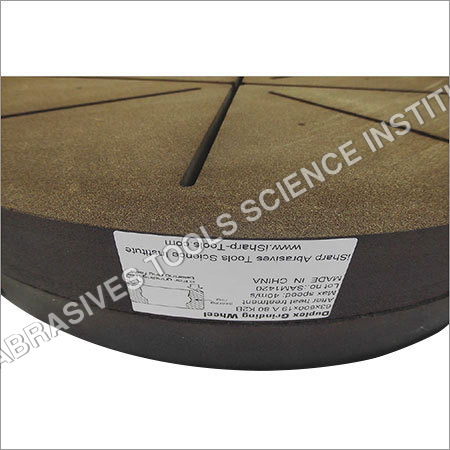
Disc Grinding Wheels
5000-7000 USD ($)/Set
Product Details:
- Grain Type Coarse, Medium, Fine
- Chemical Composition AI2O3, SiC, Bonding agent
- Backing Fiber, Paper
- Shape Round
- Bonding Resinoid / Vitrified
- Hardness Soft to Hard
- Toughness High
- Click to View more
X
Disc Grinding Wheels Price And Quantity
- 5000-7000 USD ($)/Set
- 1 Set
- 0.15 - 7000.00 USD ($)/Set
Disc Grinding Wheels Product Specifications
- Customized as per requirement
- Round
- Fiber, Paper
- AI2O3, SiC, Bonding agent
- 100 mm to 350 mm
- Coarse, Medium, Fine
- Aluminum Oxide, Silicon Carbide
- 24 to 220 grit
- Disc Grinding Wheel
- High
- Soft to Hard
- Resinoid / Vitrified
- up to 13,300 rpm
- Box / Carton
- Surface grinding, Weld removal, Deburring
- 3 mm, 4 mm, 6 mm, 8 mm
- Grey, Black, Brown
- 100 mm, 125 mm, 180 mm, 230 mm (or custom sizes)
- High
Disc Grinding Wheels Trade Information
- Qingdao
- 1000 Set Per Month
- 30 Days
- Yes
- Free samples available with shipping and taxes paid by the buyer
- carton/pallet
- All India
Product Description
Disc Grinding Wheels
Our company is considered among the leading manufacturers,exporters and suppliers of superlative quality Disc Grinding Wheels that are manufactured using premium grade raw materials for providing high functional attributes. These products are accorded with sharp cutting features for cutting hard materials such as stones. iSharp Disc Grinding Wheels are highly durable, reliable, flexible in use, sturdy in construction, and available in different technical specifications. Inquiries from the customers are most welcome for bulk or urgent requirements at industry leading prices.
Disc grinding wheel are used mainly for grinding flat and parallel parts, such as bearing parts, clutch plates, piston rings, springs, valve plates, chainsaw blades, alnico magnets, dies gears, plumbing fixtures.
- Diameter: 200-285 mm.
- Thickness: 30-130 mm.
- Hole: 19-383mm.
Note: Special specifications can be made on the customer's requirements.
Versatile Dimensions for Every Task
Disc Grinding Wheels are offered in a range of diameters and thicknesses, from 100 mm to 230 mm and 3 mm to 8 mm, supporting both standard and custom sizing. This adaptability ensures you can select the ideal wheel for surface grinding, weld removal, or deburring, maximizing productivity and finish quality.
Exceptional Material Strength and Abrasive Density
Infused with aluminum oxide or silicon carbide, these wheels deliver high toughness, hardness, and durability. Their superior abrasive density, coupled with coarse to fine grain sizes (24220 grit), ensures thorough material removal while maintaining surface integrity for industrial-grade results.
Reliable Performance and Custom Packaging
Designed for maximum RPMs of up to 13,300, disc grinding wheels are available in grey, black, or brown with fiber or paper backing. Packaged securely in boxes or cartons, they ensure safe storage and transportation. Custom roll and strip sizes are also offered to align with unique operational requirements.
FAQs of Disc Grinding Wheels:
Q: How do I select the right disc grinding wheel diameter and thickness for my application?
A: Choose the diameter and thickness based on the equipment compatibility and the required task. For precise weld removal or surface grinding, select a size that matches your machines specifications and material thickness. Standard options range from 100 mm to 230 mm in diameter and 3 mm to 8 mm in thickness, with custom sizes available upon request.Q: What materials are used in manufacturing these disc grinding wheels?
A: These grinding wheels are made from high-quality aluminum oxide (AI2O3) or silicon carbide (SiC), combined with a bonding agent. This composition offers high abrasive density for effective grinding, toughness, and consistent performance across various metals and surfaces.Q: When should I use a coarse, medium, or fine grain disc grinding wheel?
A: The grain size depends on the application: use coarse (2460 grit) for rapid material removal and heavy welds, medium (80120 grit) for general-purpose surface smoothing, and fine (150220 grit) for finishing tasks and delicate deburring. Select grain type based on your desired surface finish and material resistance.Q: Where are these disc grinding wheels suitable for use?
A: These wheels are designed for surface grinding, weld removal, and deburring in industries such as metalworking, construction, and fabrication. Their robust construction allows usage in manual or automated grinding machines across workshops and manufacturing facilities.Q: What is the process of using disc grinding wheels for weld removal and deburring?
A: Attach the wheel to a compatible grinder, ensuring the RPM rating does not exceed 13,300. Use a firm and even pressure while guiding the wheel along the weld or burrs. Proper technique enhances material removal, leaving a smooth, clean finish suitable for further processing or final assembly.Q: What benefits do high abrasive density and resinoid/vitrified bonding offer?
A: High abrasive density ensures efficient, long-lasting grinding performance, while resinoid and vitrified bonding provide durability and resistance to wear. These features result in stable operation, reduced downtime, and cost-effective material processing, especially in demanding and continuous-use environments.Tell us about your requirement

Price:
Quantity
Select Unit
- 50
- 100
- 200
- 250
- 500
- 1000+
Additional detail
Mobile number
Email

Other Products in 'Bonded Grinding Wheel' category


ISHARP ABRASIVES TOOLS SCIENCE INSTITUTE
Contact Details

- A-2507, Kai Xuan Men, Tong Bai Nan 238#, Zhengzhou - 450006, Henan, China
- Phone : 86-371-63716933
- Mr. Sam Zhang
- Mobile : +8613603714080, +8618639010052
 Send Inquiry

ISHARP ABRASIVES TOOLS SCIENCE INSTITUTE
All Rights Reserved.(Terms of Use)
Developed and Managed by Infocom Network Private Limited.
Developed and Managed by Infocom Network Private Limited.
